
What is Mold Remediation?
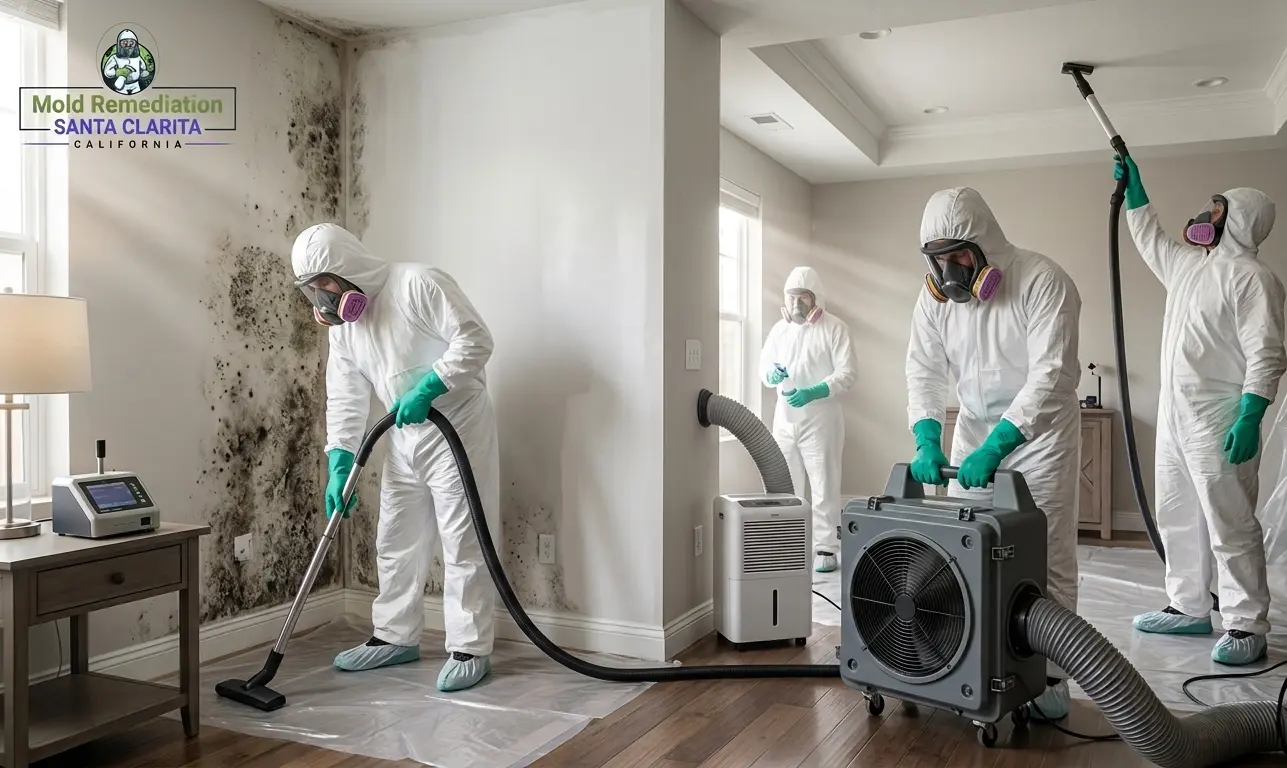
Mold remediation means getting rid of mold that's taken hold in a building. This process starts with figuring out where the mold came from, then sealing off the area where it's growing, and finally, actually cleaning up and taking out the mold. The whole point is to stop the mold from coming back and to make sure the place is safe for everyone who lives or works there.
Mold remediation in Santa Clarita is a methodical approach to finding, containing, removing, and stopping mold from taking hold in your home. Trained professionals employ moisture mapping, HEPA filtration, and EPA-approved biocides to restore clean air. It's more than just surface-level cleaning; we're addressing the root causes. Humidity, for instance, is a big deal, particularly with Santa Clarita's unpredictable climate. New standards coming in 2026 will require testing after the work is done.
Signs You Might Need Mold Remediation
Catching mold early is key to stopping it from getting worse. Keep an eye out for these telltale signs, often found in Santa Clarita homes due to the humidity that can soar to 80% during monsoon season:
- A persistent, musty odor, even when mold isn't visible.
- Dark, green, or white stains appearing on walls, ceilings, or air vents.
- Unexplained health symptoms like chronic cough, sinusitis, or skin rashes from spore exposure.
- Recent water events, such as roof leaks or plumbing failures.
- Santa Clarita's foothill microclimate accelerates hidden growth in attics and crawlspaces.
Causes of Mold in Santa Clarita Homes
Santa Clarita's Mediterranean climate—average 15–20% annual rainfall concentrated in winter, plus summer heat trapping indoor moisture—fuels mold in 30% of local homes per recent LA County studies. The main culprits:
- Ongoing leaks stemming from aging pipes or defective seals.
- Indoor humidity >60% from unvented dryers or showers.
- The summer air in Santa Clarita, stagnant and thick, creates a problem: insufficient airflow in enclosed spaces.
- California's seismic activity can also crack foundations, inviting water intrusion.
Why Mold is a Hazard
Mold spores can trigger airway irritation, making asthma worse – a problem for about 10% of Californians – and potentially leading to fatigue or neurological issues due to mycotoxins, particularly in those already vulnerable. Stachybotrys, commonly known as black mold, presents even greater dangers, according to CDC recommendations. From a structural standpoint, mold can eat away at drywall, reducing its integrity by 20–50%, and also damage wood framing, which could mean repair bills exceeding $10,000. Santa Clarita homeowners, in particular, are at increased risk, especially with wildfire smoke creating conditions that trap moisture.
Mold Remediation Process
In Santa Clarita, the mold removal process is most effective when it follows the IICRC S520 guidelines. The process, when done correctly, ensures lasting effectiveness.
To determine the extent of the problem, we use thermal imaging, moisture meters, and swab/air sampling. Finding hidden mold is a key part of this process.
- To prevent cross-contamination, negative air machines and polyethylene barriers are used.
- HEPA vacuums and scrubbers are designed to capture 99.97% of particles that are 0.3 microns in size.
- HEPA-abrasive methods are effective for removing mold. Bleach is a poor choice, as it fails to eliminate the root cause of the problem.
- Fogging with hydrogen peroxide-based agents is a proven method for removing leftover contaminants.
- To confirm a spore count below 500 spores per cubic meter, the process involves drying, reconstruction, and air quality testing.
Mold Remediation Cost in Santa Clarita (2026)
Mold remediation costs in Santa Clarita are expected to fall somewhere between $2 and $7 per square foot in 2026. This translates to a total cost ranging from $500 to $15,000, according to 2026 figures from HomeAdvisor and other local sources. Several factors will influence the final price:
- The size of the affected area, such as a 100-square-foot bathroom, which might cost between $1,500 and $4,000.
- Mold species (toxic types add 25%).
- Accessibility (crawlspaces expand by 30–50%).
- Labor rates in Santa Clarita average $75–$150/hr; insurance often covers if tied to covered damage.
DIY vs. Professional Mold Removal
| Factor | DIY Limitations | Professional Advantages |
|---|---|---|
| Scope | Limited to small areas, surface-level | Can handle any size, including structural issues |
| Tools/Effectiveness | Basic cleaners often miss the source | Uses industrial HEPA, guarantees verified results |
| Safety | Potential for spore spread | Containment and PPE compliance are standard |
| Longevity | 50% recurrence rate | Recurrence rate drops below 5% with moisture control |
| Cost Efficiency | Low initial cost, but high long-term | More expensive upfront, but saves money in the long run |
Data indicates a 70% failure rate for DIY in humid areas like Santa Clarita—professionals ensure compliance with regulations.
Why Local Knowledge Matters in Santa Clarita
Santa Clarita has its quirks. Think about the morning fog that rolls in, the ever-looming possibility of earthquakes, and the stringent Title 24 ventilation rules. These aren't things you can just read about; they require a deep understanding of the area. Local experts know how to get permits approved quickly, and they understand how to design systems that work with our typical 50–70% humidity levels. They're simply better than services that don't specialize in this region.
How to Keep Mold at Bay
- Keep relative humidity below 50% using dehumidifiers and exhaust fans.
- Seal cracks and insulate pipes against condensation.
- Use mold-resistant paints (e.g., with mildewcides).
- Monitor with $20 hygrometers; annual professional checks.
- Elevate outdoor AC units to avoid soil moisture wicking.
Taking action beforehand can cut your risk by a significant margin, according to the EPA – up to 80% :
Why You Should Go with Certified Professionals
Select IICRC-certified teams that utilize non-toxic, low-VOC methods, all in accordance with California EPA regulations. They provide documentation for insurance and resale value.
How long does mold remediation take in Santa Clarita?
1–7 days; minor jobs 24–48 hours, extensive HVAC cases up to a week.
Is mold remediation covered by insurance in California?
Often yes for sudden damage (e.g., floods); exclusions apply to neglect review riders.
Can I stay home during mold removal in Santa Clarita?
Not advised; containment creates negative pressure zones unsafe for occupants.
Spot mold signs? Schedule a mold inspection in Santa Clarita for peace of mind check moldremediationsantaclarita.com
Comments (0)